Established in 2007 and hosted by Ubiquity.
Managed by Tribhuvan University Central Library.
Nepal Journals Online (NepJOL) is a service to provide online publication of Nepalese journals. For more information about NepJOL and how to join the service, see the About page.

Archives
-
2025 – Generic Issue
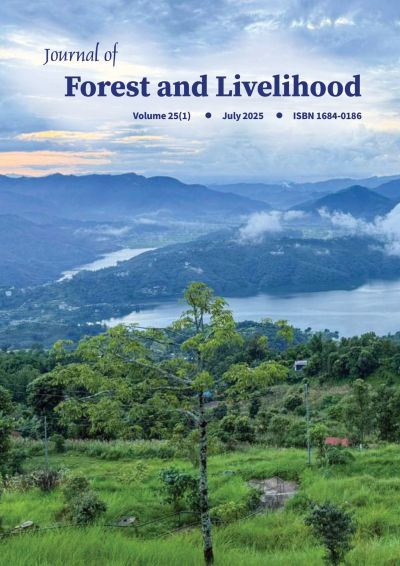
Vol. 25 No. 1 (2025)In this special issue of the Journal of Forest and Livelihood, we introduce research articles around community forestry that focuses on landscape restoration, ecological resilience, and livelihood improvement and shed light on how they may lead to sustainable resource management.
-
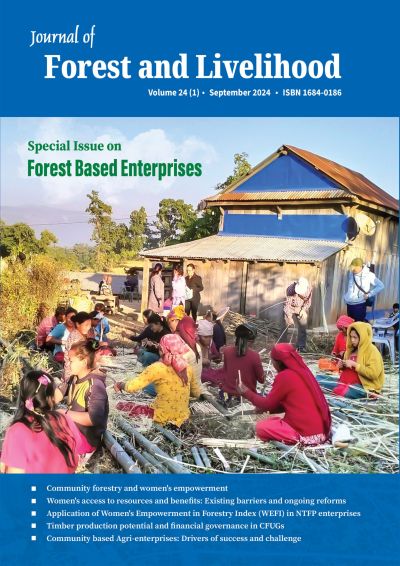
Special Issue on Forest Based Enterprises, Vol 24 (1)
Vol. 24 No. 1 (2024)Community forestry is known to provide opportunities for economic development. Through small and medium scale enterprises, community forestry has generated income and employment to rural communities. However, it’s the potential on generating income and scalable business models has not been fully realized. Similarly, majority of the lucrative forest-based enterprises, for instance timber enterprisers, are largely dominated by men whereas small scale enterprises, mainly non-timber forest products (NTFPs) based, have involved women and have generated opportunities in terms of income and employment. Yet, women face struggles in terms of registering forest-based business, finance their enterprises, and selling their products, which are relatively less examined. Thus, evidence-based knowledge generation for linking women to productive resource-decisions, and entrepreneur linkage to enhance community-based enterprises for climate and social resilience is crucial.
This special issue on forest-based enterprises presents seven papers focusing on community forestry and women’s empowerment, barriers, and reforms in women’s access to resources, timber production potential and financial governance in CFUGs and success and challenges of community based enterprises.
-
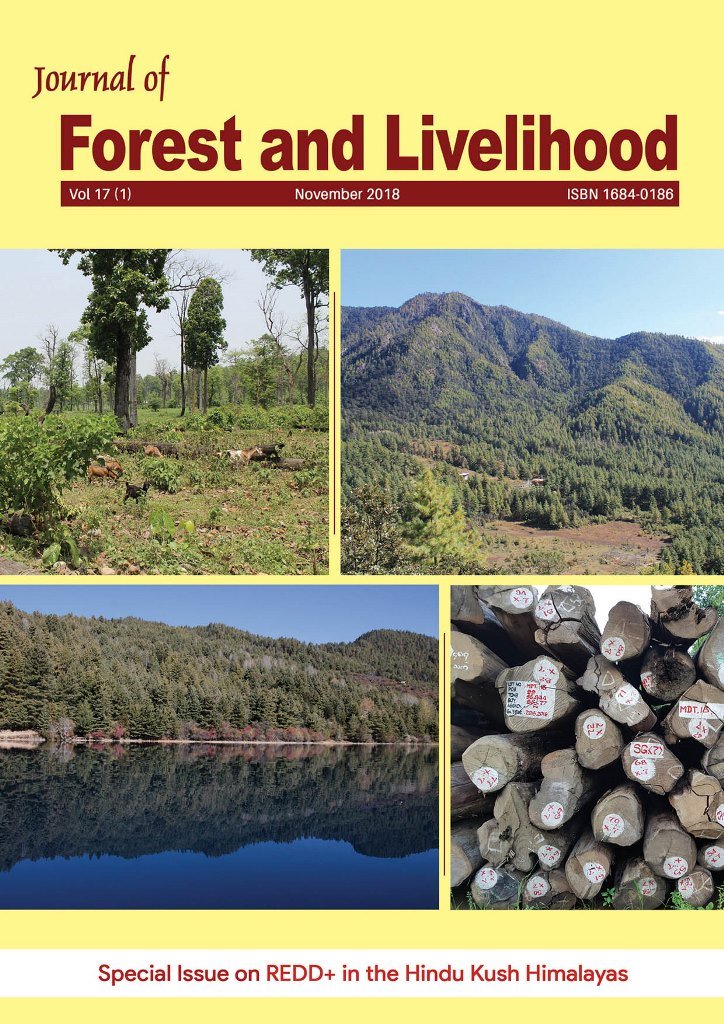
Vol. 17 No. 1 (2018)
Countries in the Hindu Kush Himalaya (HKH) region have historically taken diverse initiatives towards sustainable forest management (SFM) aimed at conserving critical ecosystems. To protect resources by regulating access to these resources, indigenous people and local communities of the HKH region have developed diverse and well-established norms and procedures. Given the rich diversity in ecology and society in the region, the specific institutional and technological practices and innovations are also diverse. At the same time, most of the countries in the region have also actively involved in Reducing Emissions from Deforestation and forest Degradation and the role of conservation, sustainable management of forests and enhancement of forest carbon stocks (REDD+) readiness process.