Traditional method of disease classification, and identification of medicinal plants and mushrooms by Raji ethnic people in western Nepal
Keywords:
Indigenous people, medicinal plants, traditional skills, mushroom poisoningAbstract
Rajis are indigenous people distributed in mid and far western parts of Nepal. They have immense knowledge and traditional practices on utilization of plant resources as food and medicine. The present study was conducted in Surkhet and Kailali districts of western Nepal to document the Raji’s knowledge on medicinal plants and mushrooms. A total of 57 species of vascular plants belonging to 50 genera and 33 families were reported as the medicinal plants traditionally being utilized by the Raji people. They have classified the human diseases into six categories according to various symptoms. Traditionally, the medicinal plants are identified by the healers based on the type of plant sap and smell. Mushroom colour, taste, morphology, and type of host plants are the basic criteria for identifying edible and poisonous mushrooms by the Rajis. Therefore, this wealth of information among the Raji people should be conserved.
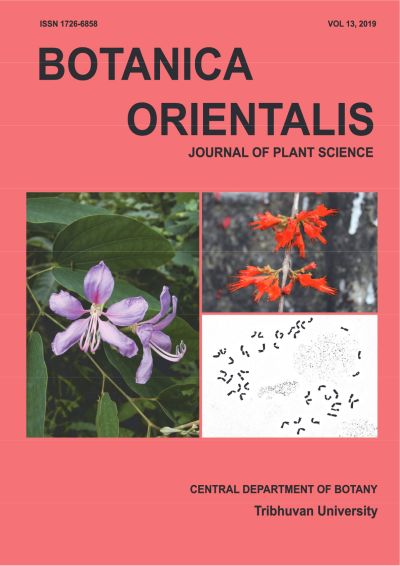
Downloads
Published
How to Cite
Issue
Section
License

This work is licensed under a Creative Commons Attribution-NonCommercial-NoDerivatives 4.0 International License.
This license enables reusers to copy and distribute the material in any medium or format in unadapted form only, for noncommercial purposes only, and only so long as attribution is given to the creator.

