Functional Outcome of Percutaneous Ilio-sacral Screw Fixation for Posterior Pelvic Ring Injuries
Keywords:
Majeed functional score, percutaneous ilio-sacral fixation, unstable posterior pelvic injuriesAbstract
BACKGROUND
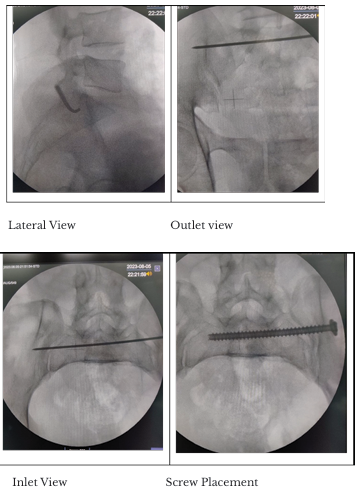
This study aimed to assess the functional outcomes of percutaneous ilio-sacral screw fixation in the treatment of posterior pelvic ring injuries.
METHODS
A total of 34 (out of 42) adult patients treated with percutaneous ilio-sacral screw fixation for posterior pelvic ring injuries, with or without associated anterior ring injuries between January 2020 and December 2023, were included in this study. There were 35% females and 65% males, all of whom completed follow-up evaluation. Clinical and radiological follow-up assessments were performed at six months, and functional outcomes were evaluated using the Majeed Functional Score.
RESULTS
The mean age of patients was 34.29 years ±13.29. The average hospital length of stay was 22.88 days ±18.63. Patients were categorized by Tile classification, with B3 injuries being the most common (26.47%), followed by C2 injuries (20.59%). Injury mechanisms included two-wheeler accidents (35.29%), pedestrian accidents (17.65%), and falls from height (14.71%). Functional outcomes assessed using the Majeed Functional Score showed excellent results in 79.41% of patients, good in 8.82%, fair in 8.82%, and poor in 2.94%. There was no incidence of neurological injury in this cohort.
CONCLUSION
The findings suggest that, if executed correctly, percutaneous ilio-sacral screw fixation is a safe and effective method for managing posterior pelvic ring injuries. Most patients achieved excellent functional outcomes, aligning with previous research on this treatment modality.
Downloads
Published
How to Cite
Issue
Section
License
Copyright (c) 2025 The Author(s)

This work is licensed under a Creative Commons Attribution-NonCommercial-NoDerivatives 4.0 International License.
CC BY-NC-ND This license allows reusers to copy and distribute the material in any medium or format in unadapted form only, for noncommercial purposes only, and only so long as attribution is given to the creator.

